The preliminary examination: what is measured before cataract surgery
Between the diagnosis and the day of surgery lies one important step: the preliminary examination. At this appointment the eye is measured precisely, the artificial lens is chosen and the informed-consent consultation takes place. Knowing what to expect makes the visit far less daunting.
Why does the preliminary examination matter so much?
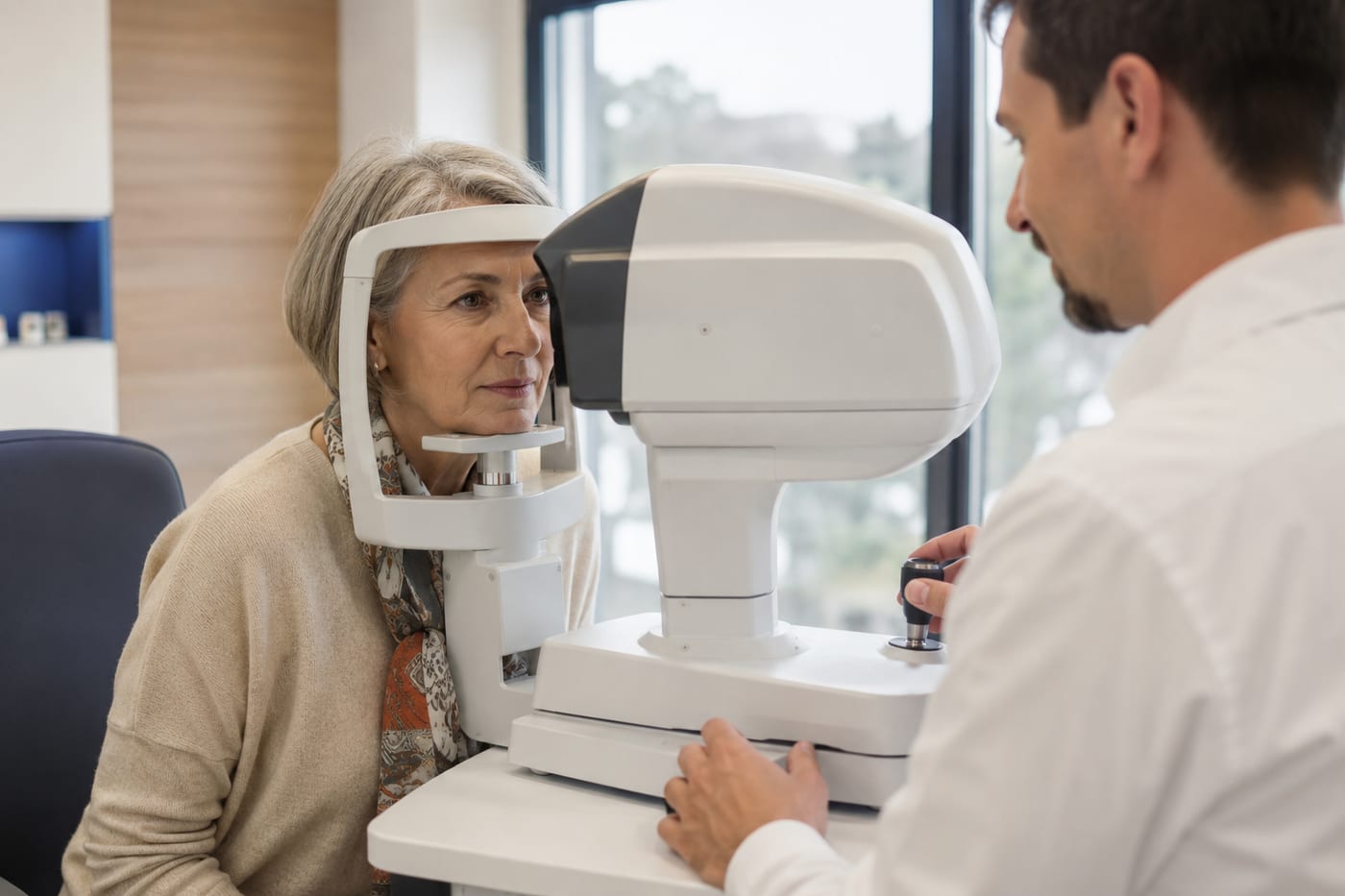
The preliminary examination is not a formality. It is the medical foundation for the entire operation. Every eye is unique. Eye length, corneal curvature and lens power vary considerably from person to person. Only precise measurements allow the surgeon to calculate which artificial lens has the right power for your eye.
An error in the measurements would mean that the visual result after surgery misses the target. This is why the preliminary examination should be carried out calmly and in full.
Your path to surgery
What is measured at the preliminary examination?
All measurements are contact-free or minimal, take only a few minutes each and are painless.

The most important measurement. A laser device measures the length of the eye and the curvature of the cornea. From these values the surgeon calculates the power of the artificial lens. The measurement is contact-free and painless.
A 3D map of the corneal surface shows whether astigmatism (an irregular curvature of the cornea) is present. Particularly important when planning toric lenses.
The innermost layer of the cornea is counted under the microscope. A low cell count raises the risk of temporary corneal swelling after surgery.
Measures how thick the cornea is. A thin cornea can react more sensitively during surgery. The measurement takes a few seconds.
Measured in bright and in dim light. Particularly relevant for premium lenses: very large pupils can raise the risk of halos and rings of light.
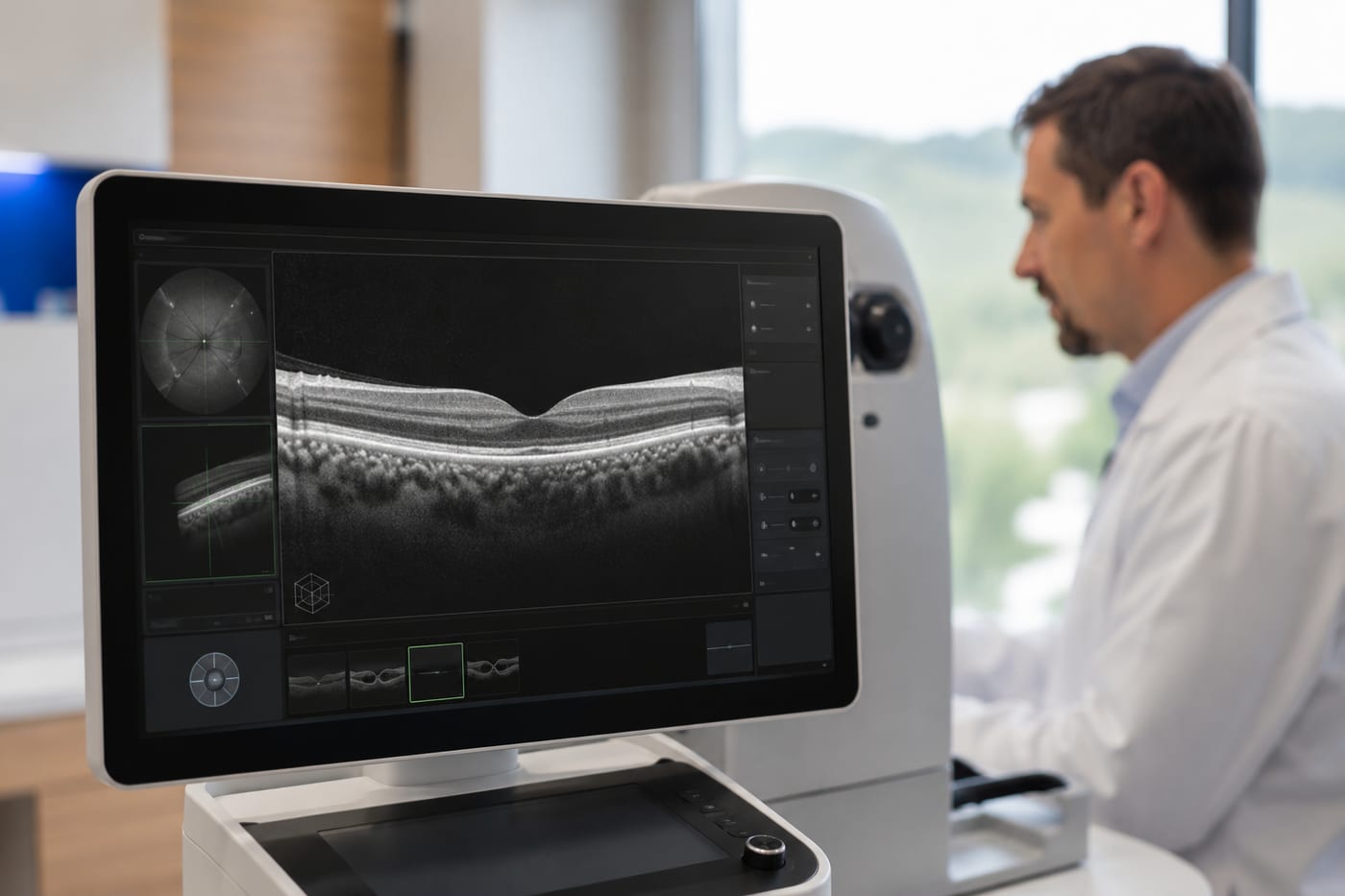
Visual acuity, eye pressure, the retina and the optic nerve are checked. This also picks up conditions such as glaucoma or macular degeneration that could affect the result.
The informed-consent consultation
At the preliminary examination the surgeon explains the planned procedure and discusses the lens options. You learn which lens is suitable for you and why. The surgeon also explains the possible risks and complications. At the end you sign the consent form.
Use this appointment for all your questions. There are no unimportant questions. A good consultation is the basis for an informed decision.
Questions you might bring along:
- Which lens do you recommend for me, and why?
- What visual result is realistic?
- Do I have to pay extra for a lens, or will reading glasses still be needed?
- What happens if the result does not meet my expectations?
The medication review
The surgeon asks about all medicines you take regularly. Bring a complete list, including over-the-counter products and dietary supplements. Two groups matter most:
Alpha-blockers (e.g. tamsulosin): always tell your surgeon
These medicines, often prescribed for prostate conditions, can trigger what is known as intraoperative floppy iris syndrome (IFIS) during surgery, in which the iris becomes slack. If the surgeon knows in advance, he or she can prepare for it. Always mention alpha-blockers, even if you stopped taking them long ago.
Blood thinners: usually no need to stop
For cataract surgery under anaesthetic eye drops, blood thinners do not need to be stopped in most cases. Your doctor will discuss this with you individually. Never stop blood thinners on your own. More on the preparation page.
What should you keep in mind before the preliminary examination?
Four points to prepare:
Soft lenses: at least 1 week beforehand. Rigid lenses: 2 to 4 weeks. Contact lenses change the shape of the cornea and would distort the biometry.
Bring your current glasses. The doctor needs their values as baseline information.
All medicines you take regularly, including over-the-counter products and dietary supplements.
At the preliminary examination the pupils are usually dilated. This temporarily affects your vision. Arrange for someone to accompany you, or use public transport.
How long does the preliminary examination take?
A complete preliminary examination appointment typically takes 1 to 2 hours. Most of that time is spent waiting for the dilating drops, which need 20 to 30 minutes to take effect.
Fill it in at home and bring it to your appointment: it saves time and helps your doctor. Includes a what-to-bring checklist, medication questions (alpha-blockers, blood thinners) and lifestyle questions for choosing your lens.
Biometry and lens selection belong in experienced hands. Find a specialist near you for your preliminary examination.
Find a specialist near you