How cataract surgery works
Cataract surgery, the removal of the clouded natural lens of the eye, is the most frequently performed planned operation worldwide, and one of the safest. It takes 15 minutes on average, is carried out under anaesthetic eye drops and requires no hospital stay. Most patients already see noticeably better the next day.
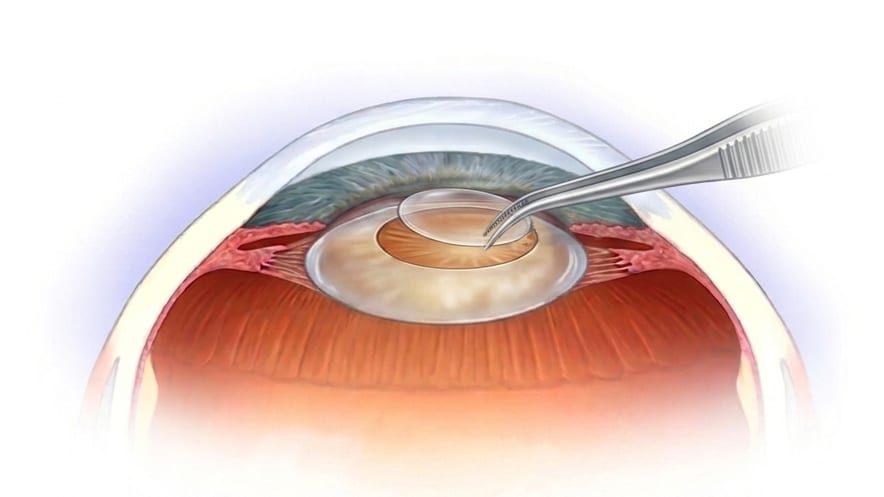
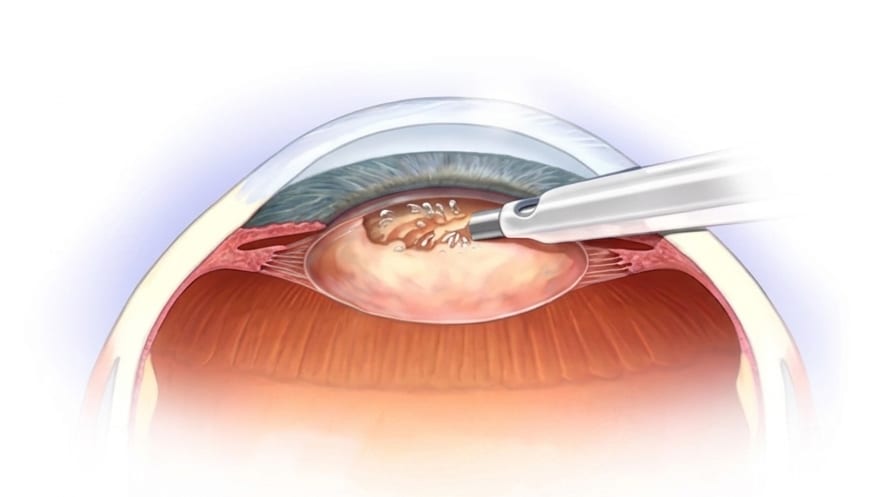
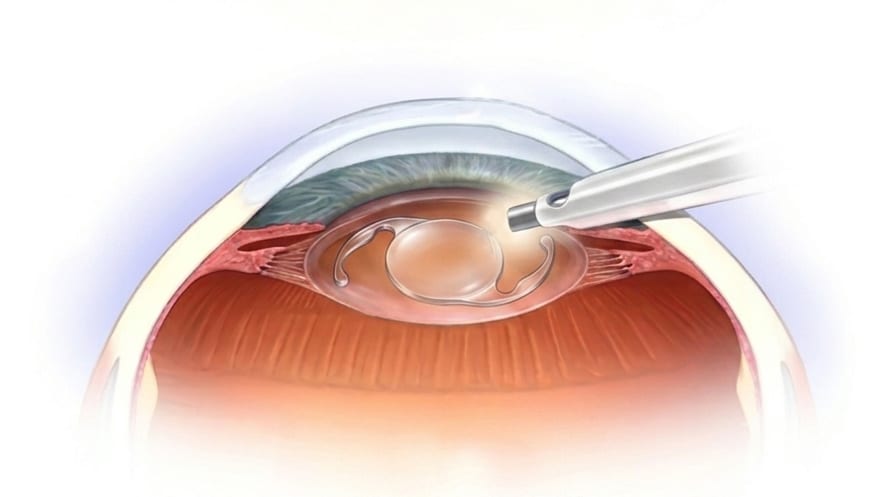
The three core steps of the procedure
No need to fear the anaesthesia
In over 95% of cases the eye is numbed with anaesthetic eye drops alone: no injection, no general anaesthesia. You stay awake during the procedure, but all you need to do is keep still. You see light and movement, but no details of the procedure itself.
Numbing eye drops. No needle, no patch. You are awake and cooperate actively.
For restless patients or more complex procedures. The eye is completely immobilised.
Only for children or when cooperation is not possible. The exception in adults.
Step by step: what happens during the operation?
The whole procedure takes 10–20 minutes. You are typically at the hospital for 2–4 hours, including preparation and monitoring afterwards.
FLACS: what the laser actually adds
In femtosecond laser-assisted cataract surgery (FLACS), a laser takes over opening the lens capsule, making the incisions and pre-fragmenting the lens. That sounds like a clear advantage over the manual method, yet independent research paints a more sober picture.
The 2023 Cochrane Review (42 randomised trials) and a 2025 meta-analysis (46 studies, 8,871 eyes) reach the same conclusion: for routine procedures there is no clinically meaningful difference in visual acuity, complication rate or healing between FLACS and conventional phacoemulsification. A marginally better visual acuity after one week (FLACS) evens out completely within a month at the latest.
Sources: Cochrane Database Syst Rev 2023, CD010735 · Scientific Reports, Feb 2025 (doi: 10.1038/s41598-025-13174-1)
- ·Geometrically more precise capsule opening, relevant for premium lenses (trifocal and toric IOLs)
- ·Slightly less ultrasound energy in the anterior chamber
- ·Posterior capsule rupture somewhat less frequent (4 in 1,000 operations according to Cochrane)
- ·Out-of-pocket payment of €500–1,000 per eye, not covered by public insurance
- ·No proven long-term benefit for standard cases
- ·Not available at every clinic
- ·Longer overall procedure time
Your day around the operation
What to expect from arrival to the trip home:
Preoperative eye drops (if prescribed by your doctor), no make-up, arrange for someone to drive you home.
Admission and a final check of the eye. Pupil-dilating drops are given; this takes 20–30 minutes.
Changing, sterile draping, anaesthetic drops. You lie relaxed on the operating table.
The procedure itself. You see light and colours, but no details. It is usually completely painless.
Brief monitoring, eye drops, a first check by the doctor. An eye shield is fitted.
Someone drives you home. Do not drive on the day of surgery. Rest at home.
All the important points for the day of the operation, to print out or save on your phone (PDF, in German).
Download PDFAn experienced surgeon explains every step to you and answers your questions. Find a specialist near you.
Find a specialist near you