Glare sensitivity at night: an early warning sign of cataract?

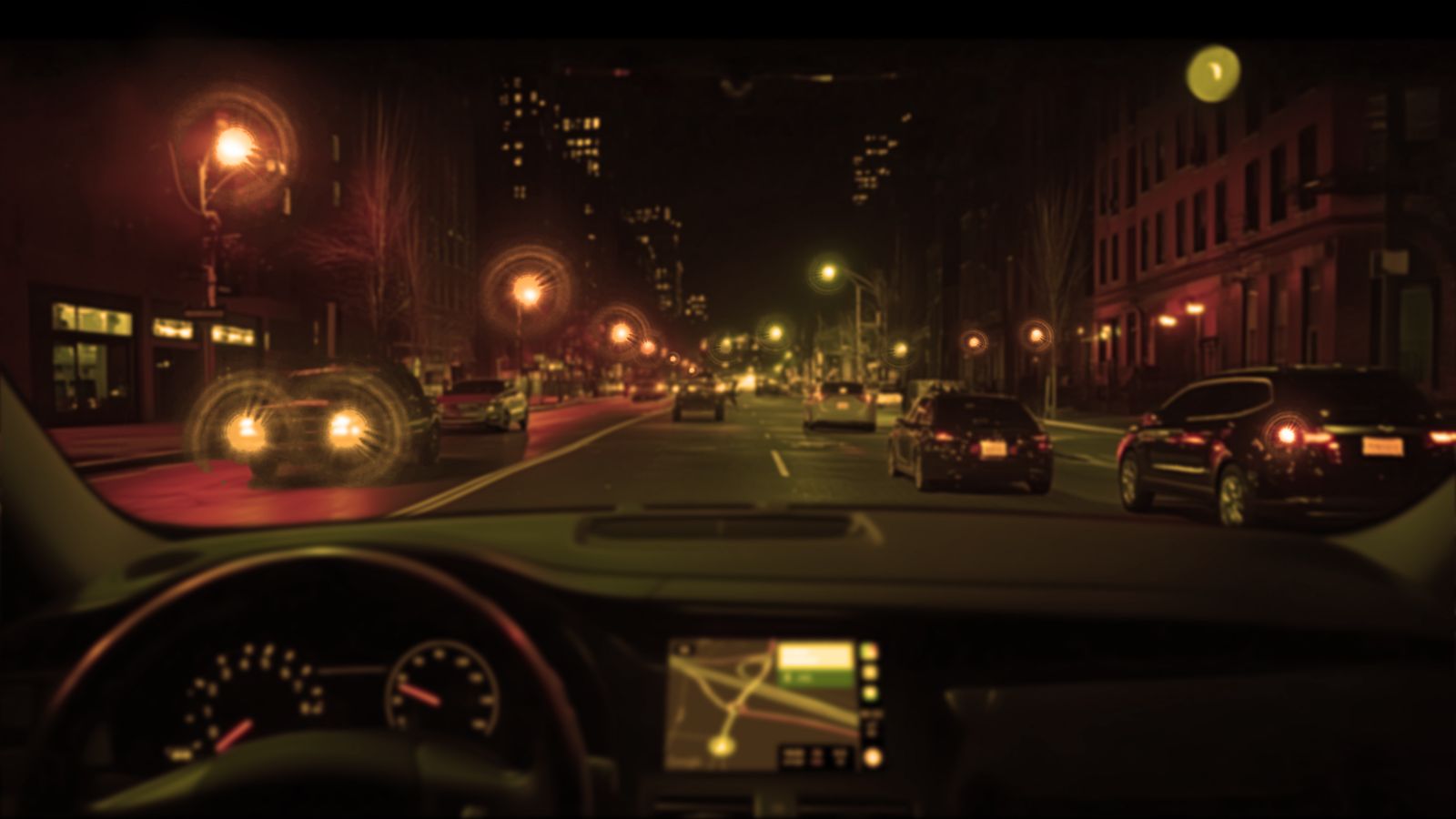
When oncoming headlights suddenly dazzle more than they used to and rings or starbursts appear around light sources, cataract (a clouding of the eye’s natural lens) is often the reason. The cause lies in the lens of the eye, which no longer focuses light but scatters it.
This article explains why glare sensitivity is often the first symptom to stand out, how to distinguish it from other causes and when an examination by an ophthalmologist is worthwhile.
Why light is perceived differently with cataract
A healthy lens is as clear as glass. It focuses incoming light precisely onto the retina. With a cataract, parts of the lens become cloudy, usually first at the edge or in the core.
When light hits these clouded areas, it is no longer focused but scattered in many directions. The result: instead of a sharp point of light, you see a glowing halo, often with fine rings. Specialists call these halos. In daylight, under even lighting, this is barely noticeable. At night, when a few bright light sources stand against a dark background, the effect becomes clearly visible.
Posterior subcapsular cataract deserves particular mention: a form of cataract that develops directly behind the lens capsule and typically causes glare early and strongly.
Typical situations where glare stands out
Not every kind of glare sensitivity has the same cause. These situations point to a link with cataract:
- Headlights of oncoming traffic seem noticeably brighter and remain distracting for longer than before.
- You see rings or a haze around street lights or traffic lights.
- Glare is stronger even in daytime, with a low sun or on a wet road.
- The glare increasingly appears away from traffic too, for instance with ceiling lights or screens with a bright background.
- New glasses no longer improve the problem to any real degree.
Take note: sudden, one-sided glare sensitivity with worsening vision can have other causes as well and should be assessed by an ophthalmologist promptly rather than waiting.
A typical everyday example: when leaving a car park in the evening, the lights at the exit barrier suddenly seem veiled. Dashboard displays also appear blurred at the edges, even though they are perfectly readable in daylight.
Other early signs that often appear together
Glare sensitivity rarely comes alone. Those affected often notice further changes at the same time, which together form a clearer picture.
Contrast vision often declines in parallel. Kerbs or steps become harder to make out in dim light. Colour perception also shifts gradually: many people only realise after surgery how yellowish or brownish their vision had become, without ever noticing.
Some people also experience a curious in-between stage in which they suddenly see better up close without reading glasses. At first this feels like an improvement, but in fact it signals a progressing clouding of the lens core. Double vision in one eye that disappears when the other eye is covered also points to cataract.
If several of these signs appear together with the glare sensitivity, the likelihood of cataract rises considerably. An eye examination brings clarity in any case.
Glare alone is not a diagnosis
Glare sensitivity also occurs with other eye conditions, for instance with certain corneal changes or after eye operations. Dry eyes too can make light feel more unpleasant without any clouding of the lens.
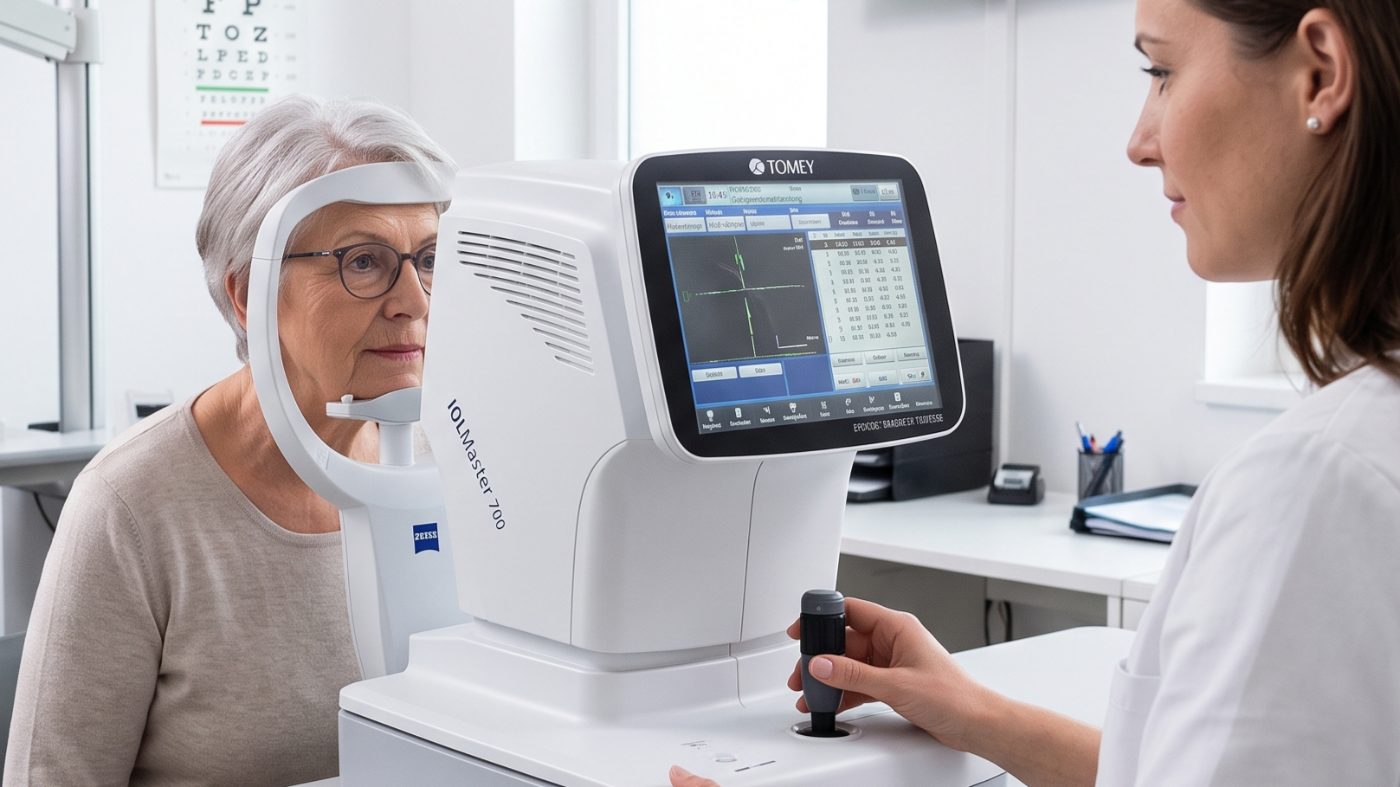
Reliable distinction is only possible through an ophthalmological examination. With the slit lamp, the lens can be viewed directly and a clouding clearly confirmed or ruled out. The test takes only a few minutes.
What to do if the glare increases
An appointment with an ophthalmologist or eye clinic brings clarity. Until the examination, a few simple everyday adjustments help:
- Wear sunglasses with good UV and glare protection, even under an overcast sky.
- On night drives, dim the interior lighting and your phone display so your eyes can adapt better.
- Avoid driving in the dark or in rain where possible, if safety is noticeably affected.
- Have the headlight alignment of your own car checked, to rule out other causes.
These measures ease the symptoms but do not remove the cause. Once cataract is confirmed, surgery is the only method that actually removes the clouding of the lens.
Frequently asked questions
Is glare sensitivity at night always a sign of cataract? No. It can also result from dry eyes, certain corneal conditions or ill-fitting spectacle lenses. An eye examination clarifies the cause reliably.
Why is glare more noticeable at night than during the day? In darkness, the pupil widens, so more light enters through the clouded areas of the lens. The contrast between a bright light source and dark surroundings intensifies the scattering effect further.
Do new glasses help against the glare? With early cataract, hardly at all. Since the scattering arises in the lens itself, glasses cannot restore the focusing of light. Only surgery, replacing the clouded lens, removes the cause.
How quickly should I react to increasing glare? If the glare restricts your everyday life, for instance when driving, arrange an appointment promptly. A routine check-up is sufficient as long as daily life is not affected.
Can glare sensitivity return after cataract surgery? Rarely. Some types of artificial lens, above all multifocal lenses, can cause initial light phenomena such as halos in some patients. These usually fade within a few months as the brain adapts to the new lens.
Do certain habits raise the risk of increased glare sensitivity? Smoking and years of UV exposure without sun protection demonstrably speed up the clouding of the lens. Sunglasses with UV protection can slow the progression, even though they cannot reverse an existing clouding.
Next steps
If you recognise yourself in these descriptions, an assessment by an ophthalmologist is worthwhile. You will find more on the examination steps on our page about the preliminary examination, and how to recognise cataract in general is described under Do I have cataract?.