Double vision in one eye: a sign of cataract?

Do you see letters or headlights doubled even though only one eye is open? Double vision that occurs in a single eye and persists when the other eye is covered is a typical sign of cataract (clouding of the eye’s natural lens). Specialists call this monocular diplopia. It differs clearly from double vision that involves both eyes and has other causes.
Why a clouded lens draws things twice
The healthy lens focuses light into a single sharp point on the retina. In cataract, especially the so-called nuclear cataract with a clouded lens core, this focusing changes unevenly. Several light paths arise at once. The brain therefore perceives two superimposed images, even though only one eye is affected.
You can picture it like a scratch on a camera lens: the light is refracted additionally at the altered spot and creates a second, fainter image. Other forms of cataract show themselves differently. Clouding at the edge of the lens tends to disturb contrast perception, while the form behind the lens core mainly causes strong glare.
How to test it yourself
First cover one eye and check whether the double vision disappears. Repeat the test with the other eye. If the double images persist while one eye is closed, the cause lies in that very eye. If they disappear as soon as you close either eye, it is binocular double vision. Its cause usually lies in the alignment of the eyes or the eye muscles and needs a different kind of assessment.
Many people also notice increasing sensitivity to glare, for instance from oncoming traffic at dusk, or a slightly yellowish tint to their vision. Both together point to an advancing nuclear cataract. One important special case: if double vision appears suddenly, possibly together with headaches or a drooping eyelid, have it assessed quickly by an eye doctor or neurologist.
When to see an eye doctor
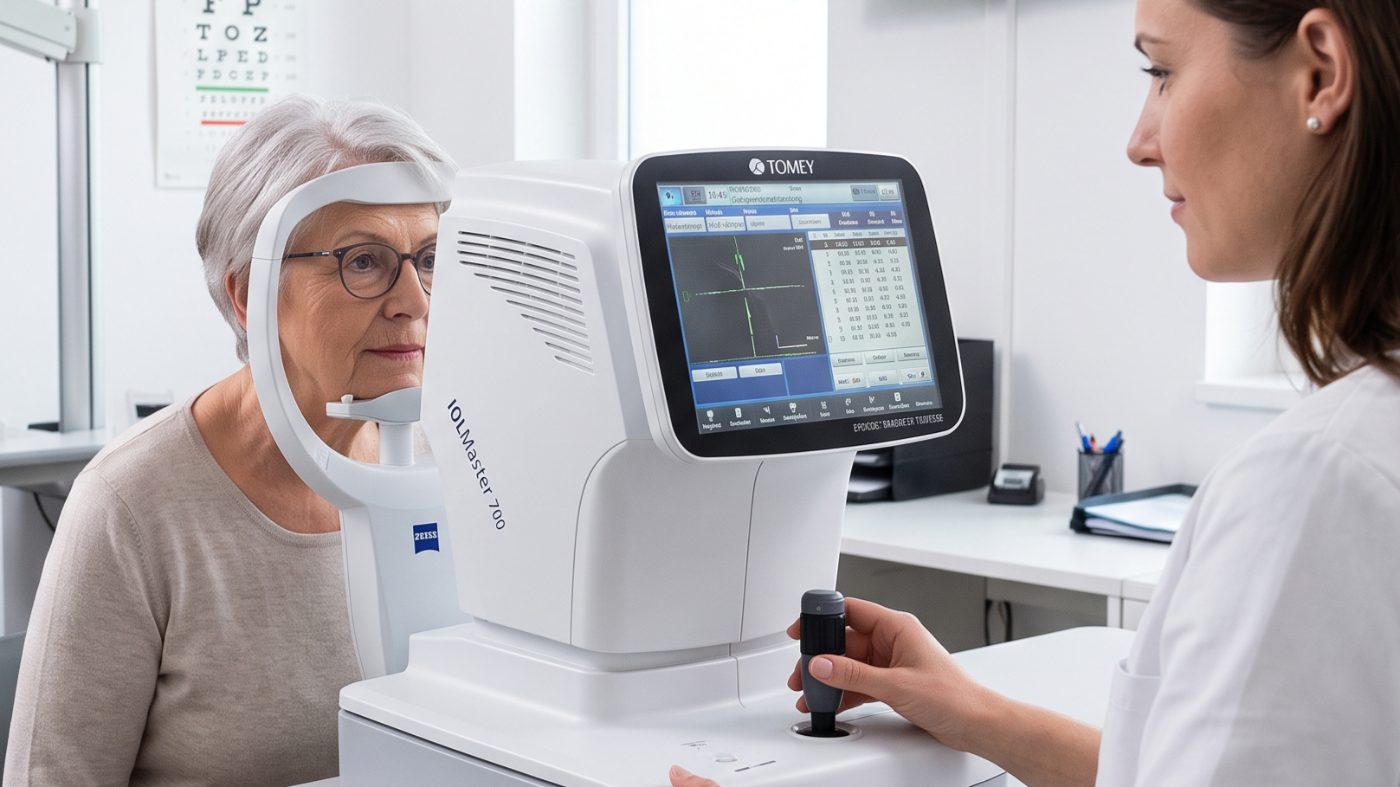
With gradually increasing double vision in one eye, a prompt regular appointment is usually sufficient. The slit-lamp examination shows painlessly and within a few minutes whether lens clouding is present and which form is responsible. New glasses, by the way, hardly help when the cause lies in the lens, because they cannot correct the uneven refraction of light.
If cataract is confirmed, the double vision generally improves markedly after surgery. The clouded lens is replaced by a clear artificial one. More on typical symptoms is under Do I have cataract?, and details of the examination are on our page about the preliminary examination.