Dry eye after cataract surgery: cause and relief

A dry, gritty feeling in the eye after cataract surgery is among the most common complaints of the first weeks. It arises from irritation during the procedure and a temporarily altered composition of the tear film. In most cases, the dry eye improves on its own. Lubricating eye drops help further within a few weeks.
This article explains where the dry feeling comes from. It also shows what you can do about it.
Why the eyes feel drier after the operation
During the operation, the surface of the eye is temporarily irritated. The disinfection, the instruments and the lid speculum all contribute. The lid speculum holds the eyelids open during the procedure. This short-term strain throws the tear film out of balance.
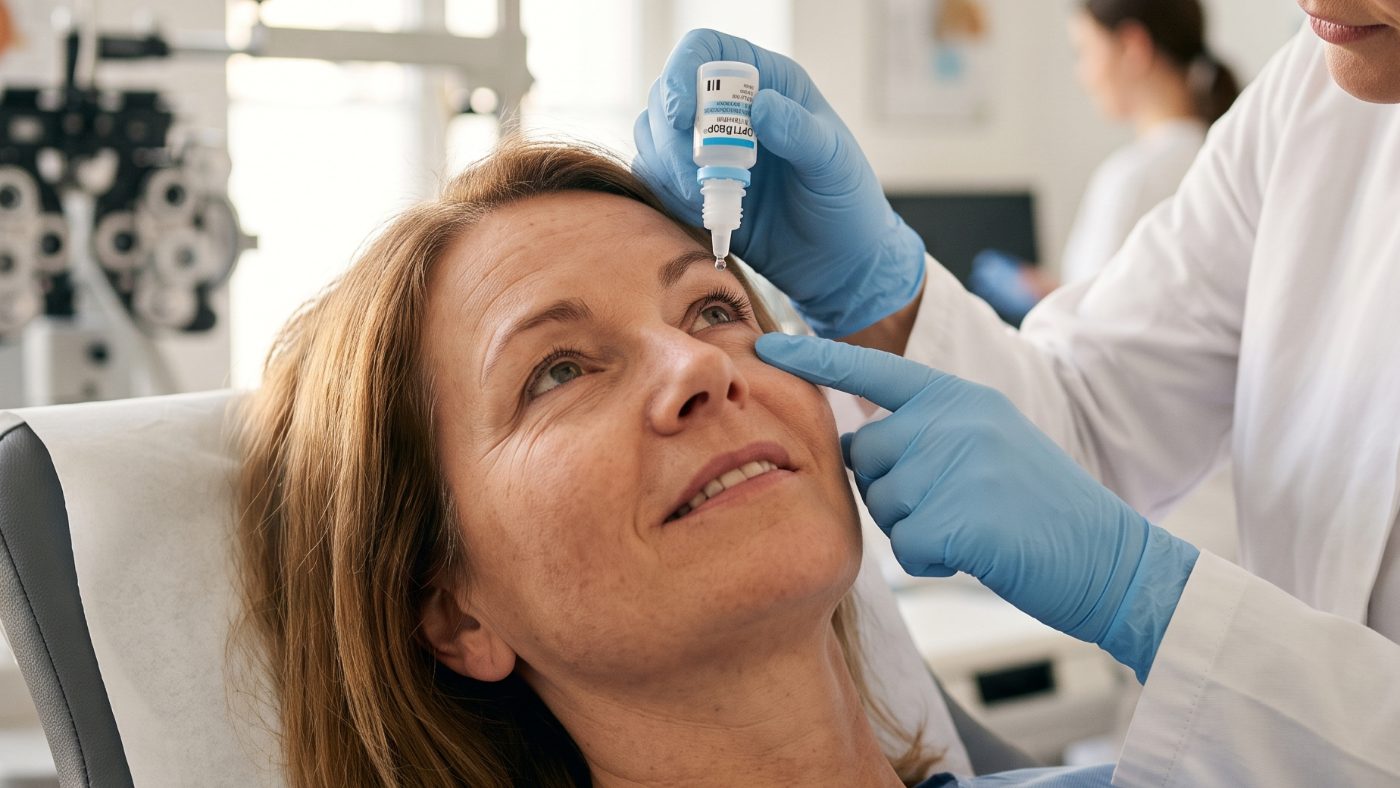
The anti-inflammatory eye drops used after the operation also affect the tear film. On top of that, many patients blink less often in the early period. They concentrate harder on seeing, which dries out the tear film as well.
Typical symptoms
A dry eye after surgery shows itself in different ways, often with several of these signs at once:
- A gritty or burning feeling, especially towards evening.
- Temporarily blurred vision that briefly improves with blinking.
- Sensitivity to light beyond the usual level after surgery.
- A foreign-body sensation even though no foreign body is present.
- Paradoxically, also increased watering as a reaction to the irritation.
- Wind while cycling or walking often intensifies the dry feeling further.
These symptoms do not worsen continuously. They tend to stay the same or slowly recede. That is exactly what distinguishes them from the alarm signs of a serious complication.
How it differs from other post-operative complaints
A dry eye feels unpleasant but generally remains harmless. It is still worth being able to tell these symptoms apart from more serious signs.
Cystoid macular oedema, a swelling at the centre of the retina, presents differently. It usually causes a genuine deterioration in vision four to six weeks after the operation, not just a blurry image that clears with blinking. This swelling mostly resolves with anti-inflammatory treatment, but it should be monitored by an ophthalmologist.
An infection inside the eye, medically called endophthalmitis, is far rarer but more serious. It causes severe pain, pronounced redness and a rapid loss of vision within a few days of the operation. This combination of severe pain and marked vision loss clearly sets it apart from a harmless dry eye.
Both complications are rare overall. Most complaints during aftercare remain harmless and temporary. If in doubt: a mild feeling of dryness can initially be treated yourself with artificial tears. With severe pain or a marked loss of vision, contact your practice at once.
What actually helps
There are simple, effective measures against a dry eye after surgery. Discuss them briefly with your practice.
- Artificial tears without preservatives several times a day, staggered in time from the prescribed drop schedule.
- Screen breaks and deliberately blinking more often, especially during concentrated close-up work.
- Room air kept from becoming too dry, for instance by airing the room or using a humidifier.
- Sunglasses outdoors, to reduce irritation from wind and UV light.
- No rubbing of the eye, even when the itch tempts you.
Agree any additional drops with your practice beforehand. That way they do not interfere with the prescribed aftercare schedule. Some practices additionally recommend leaving at least five minutes between prescribed and over-the-counter drops, so that both active substances can take full effect.
When to contact your practice
A slight dry feeling is normal, but not every degree of it is harmless. Get in touch if the symptoms increase markedly despite artificial tears. The same applies to severe pain, or if your vision steadily worsens instead of improving. In these cases another cause may be present that needs targeted treatment.
People who had dry eyes before the operation more often develop stronger symptoms afterwards. If this was already discussed at the preliminary examination, your practice will usually plan an adapted drop schedule.
Frequently asked questions
How long does the dry feeling typically last after surgery? Usually a few days to a few weeks. For most people it improves clearly within the first month. This runs in parallel with tapering off the corticosteroid eye drops.
May I use artificial tears in addition to my aftercare schedule? Generally yes. Check briefly with your practice and apply the preparations at staggered times. That way they do not dilute each other.
Is a dry eye a sign of a complication? No, it is usually a temporary, harmless side effect of healing. Only increasing pain or worsening vision calls for prompt assessment.
I had dry eyes before the operation. Will it get worse afterwards? Often yes, at least temporarily. Mention a known dry eye at the preliminary examination. Your practice can then tailor the aftercare to it.
How do I recognise the difference from a more serious complication? A dry eye usually stays the same or slowly improves. Severe pain, marked vision loss or increasing redness, by contrast, point to a complication that should be assessed promptly.
Do the corticosteroid eye drops make the dry eye worse? Yes, they can alter the tear film further, but they are necessary for wound healing. So do not stop them on your own initiative; raise any complaints at the check-up instead.
Next steps
You can read more about the whole healing process after the operation in our article on aftercare. An overview of other, rarer complaints after surgery can be found under risks.
Sources
- Kataraktoperation - DocCheck Flexikon
- Endophthalmitis - DocCheck Flexikon
- Katarakt Operation - Augenarzt Online
- Trockenes Auge nach Katarakt-Operation: systematische Übersichtsarbeit und Metaanalyse (BMC Ophthalmology)