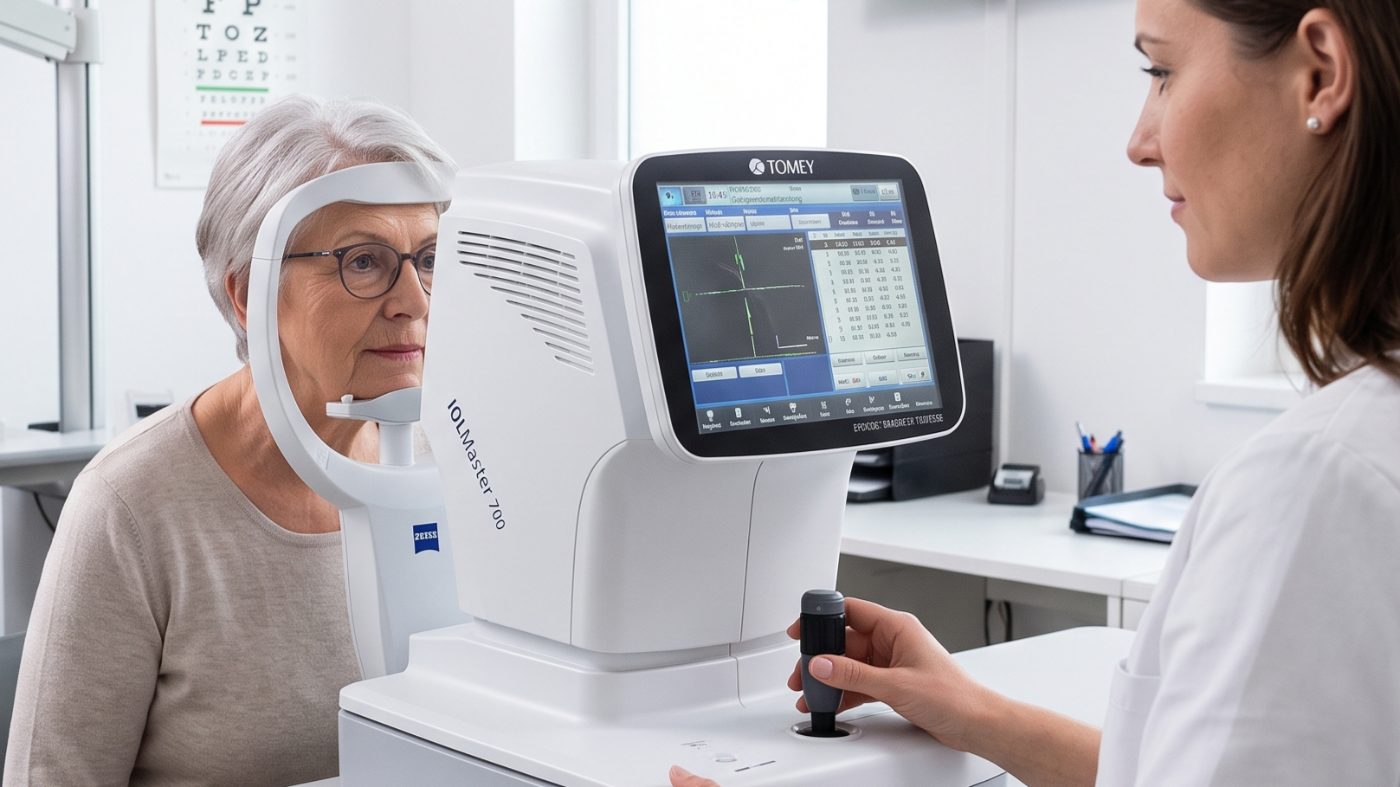
Myth: cataracts only affect older people

Many people regard cataract (a clouding of the eye’s natural lens) as a pure sign of old age that begins at retirement age at the earliest. Age-related cataract is indeed by far the most common form, yet a cataract can develop at any age, from birth into old age. The cause determines when it arises, not age alone.
This article clears up the myth and shows which forms of cataract can affect younger people too.
Where the myth comes from
Age-related cataract does in fact account for the vast majority of all cataract operations. From the age of 50, its frequency rises sharply; between 70 and 80, around half of all people are already affected. These high numbers shape the general image of cataract as purely a disease of old age.
What gets overlooked is that other causes can also lead to a clouding of the lens, regardless of age. These forms are rarer, but medically well understood and by no means a mere curiosity.
When babies are born with cataract
Congenital cataract is present at birth or develops in the first months of life. Possible causes include genetic predisposition, infections of the mother during pregnancy such as rubella, or metabolic disorders such as galactosaemia.
In infants, acting quickly matters, because otherwise a lazy eye, known as amblyopia, can develop. The affected eye then fails to learn to see sharply in time. Paediatricians and ophthalmologists therefore routinely examine newborns’ eyes for lens opacities as well.
Cataract in younger adults
A cataract can also develop in adults under 50, usually with an identifiable trigger. These include:
- Eye injuries (traumatic cataract): after blunt or penetrating trauma, the lens can become cloudy, sometimes within weeks.
- Diabetes mellitus: the risk is markedly raised; with poorly controlled blood sugar, the clouding sometimes develops at a younger age.
- Long-term corticosteroid therapy: both steroid tablets and certain eye drops can promote a clouding of the lens, regardless of age.
- High short-sightedness (myopia): it raises the risk of certain cataract forms even in younger years.
- Previous eye operations: after vitreous surgery, for example, a cataract often develops more quickly.
Steroid-induced cataract in younger patients
Another cause that is often overlooked is prolonged treatment with corticosteroids. This applies to steroid tablets as well as certain steroid eye drops, for instance in chronic inflammatory diseases or asthma. Anyone taking such medication for years has a raised risk of a particular form of lens clouding, whatever their age.
Chronic inflammation inside the eye, known as uveitis, can also lead to a cataract in younger people. Here, treating the underlying disease usually comes first, before cataract surgery is sensibly planned.
Why the age-related form remains the rule nonetheless
Even though cataract is possible at any age in principle, age-related cataract remains by far the most common form. In younger patients, however, it is always worth asking about an identifiable cause, since this can influence treatment and aftercare.
What matters for all age groups: the treatment is fundamentally the same. The clouded lens is surgically removed and replaced with a clear artificial lens, regardless of what caused the clouding.
What this means for your own vigilance
Younger people who notice changes in their vision often push the thought of cataract far away. That is exactly what can needlessly delay an assessment. Blurred vision, increasing sensitivity to glare or frequent changes of glasses are grounds for an eye examination at any age.
Especially with known risk factors such as diabetes, longer-term corticosteroid therapy or an earlier eye injury, early attention pays off, whatever your age.
Why the right classification matters
If a cataract in a younger person is dismissed too quickly because their age does not seem to fit, the diagnosis is sometimes delayed. Ophthalmologists therefore examine the actual findings at the lens first, regardless of age. Only afterwards do they search for a possible cause, if age alone does not explain the clouding.
Frequently asked questions
Can children really develop cataracts? Yes, congenital cataract is present at birth or develops in the first months of life. It is usually detected early, since prompt treatment matters for visual development.
Is cataract in young adults just as treatable as in older people? Yes, the surgical approach is fundamentally the same. In younger patients, an underlying cause is usually also looked for.
Can diabetes alone trigger a cataract, even without advanced age? Diabetes raises the risk considerably and can cause the clouding to develop earlier than usual. Good blood sugar control lowers this risk over time.
From what age should you start watching for symptoms? There is no fixed age threshold. Anyone who notices a deterioration in vision, at whatever age, should have it checked by an ophthalmologist.
Can long-term corticosteroid therapy really cause cataract? Yes, both steroid tablets and certain steroid eye drops can raise the risk over time. People on such long-term therapy benefit from regular eye check-ups.
Do you notice a traumatic cataract immediately after the injury? Not always. Sometimes the lens only clouds over weeks or months after the accident. That is why an eye check-up is worthwhile after any serious eye injury, even if vision seems fine at first.
Next steps
You can read more about the causes and forms of cataract under What is cataract?. How to interpret first signs in yourself is explained under Do I have cataract?.